

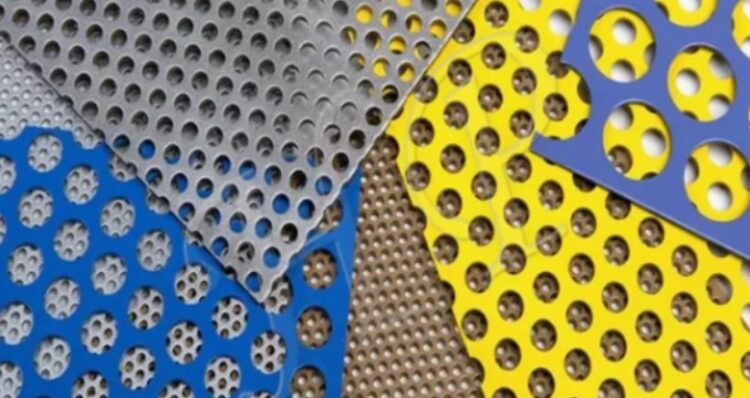
From Functional Material to Artistic Statement The Rise of Decorative Mesh
admin | November 17, 2025 | 0 | Finance
Remember that stark, chain-link fence from the schoolyard or the industrial grating on a factory floor? For decades, that was the entire personality of metal mesh—strictly functional, brutally utilitarian, and about as artistic as a concrete slab. But somewhere along the line, a revolution happened. Designers, artists, and architects looked at these grids and webs and saw not just barriers, but blank canvases. They saw the potential for play, for pattern, for poetry in the perforations. This is the story of that transformation, the journey of a humble material stepping into the spotlight and becoming a defining element of modern aesthetics. We’re talking, of course, about the spectacular rise of Decorative Mesh.
This isn’t just about choosing a prettier pattern; it’s a fundamental shift in how we perceive the very nature of materials. The journey of Decorative Mesh from the workshops of industrial suppliers to the mood boards of high-end interior designers is a testament to a growing desire for spaces that tell a story, that play with our senses, and that blur the lines between the built environment and art. It’s a material that has learned to flirt with light and shadow, to dictate rhythm without mass, and to create presence through absence. The evolution of Decorative Mesh is, in many ways, the evolution of design thinking itself, moving away from rigid categories and towards a more fluid, expressive language.
The Humble Beginnings: More Than Just a Fence
To truly appreciate where we are, we have to understand where we started. The ancestors of today’s Decorative Mesh were workhorses, pure and simple. Expanded metal mesh, much like the classic examples you’d find on a site like HP Stainless Steel Mesh, was born from pure industrial necessity. The process itself is a marvel of efficiency—taking a single sheet of metal and simultaneously slitting and stretching it to create a diamond-shaped pattern that is incredibly strong and lightweight. Its primary virtues were cost-effectiveness, durability, and its ability to provide security, allow for ventilation, and act as a filter or walkway surface. It was the unsung hero of factories, processing plants, and infrastructure projects, doing its job quietly and without any expectation of admiration.
But within that raw, industrial functionality lay the seeds of its artistic future. The very characteristics that made it a great industrial material—its strength-to-weight ratio, its inherent pattern, and its permeability—were exactly what visionary minds would later latch onto. Someone, somewhere, looked at that repetitive, geometric pattern and saw rhythm. They felt the textured, almost tactile surface and imagined depth. They held it up to the light and watched how it carved the illumination into a thousand little beams. This was the ‘eureka’ moment. The material hadn’t changed, but the perception of it had undergone a seismic shift. The potential for Decorative Mesh was always there, hidden in plain sight, waiting for a creative eye to see it not for what it was, but for what it could be.
This re-contextualization is at the heart of the material’s appeal. Taking something so intrinsically linked to the gritty, real world and placing it in a pristine gallery or a luxurious home creates a fascinating tension. It adds an edge, a narrative, a piece of industrial history that grounds a space and gives it a unique character. This foundational history is what gives modern Decorative Mesh its authenticity; it’s not a material pretending to be something it’s not. It’s a material proudly embracing its past while being reinterpreted for a completely new future.
The Artist’s New Playground: Weaving with Light and Shadow
When the Decorative Mesh found its way into the artist’s studio, it ceased to be a mere building component and became a medium for expression. Artists are naturally drawn to materials that challenge them, and mesh offers a unique proposition: how do you create form with something that is fundamentally about voids? The answer lies in its interaction with light. A solid wall is just a wall, but a wall clad in a finely crafted Decorative Mesh is a living, breathing entity that changes with the time of day. Morning sun might cast sharp, defined shadows, creating a dramatic graphic pattern on the floor, while the soft, diffuse light of a cloudy day might render the same mesh as a delicate, almost ghostly veil.
This chameleonic quality is a goldmine for creators. Sculptors use layers of Decorative Mesh to build volume and complexity, creating pieces that appear solid from one angle and transparent from another. The viewer’s movement becomes part of the art, as the sculpture seems to morph and dissolve before their eyes. Installations often use vast swathes of Decorative Mesh to divide spaces without closing them off, guiding flow and sightlines while maintaining a sense of openness and mystery. In these contexts, the Decorative Mesh is not just a material; it’s an active participant in the artistic experience, a collaborator that brings the elements of light and movement to the table.
And let’s not forget the sheer tactile pleasure of it. While we’re often told not to touch the art, a piece made from Decorative Mesh almost begs for it. The textured surface, the play of cool metal against warm skin, the subtle sound it makes when rustled—these are multisensory experiences that a flat canvas or a bronze statue simply cannot provide. This engagement on multiple levels is what makes artistic applications of Decorative Mesh so powerful and memorable. It’s art that you don’t just see, but almost feel and hear, an immersive encounter that breaks down the traditional barriers between the artwork and its audience. The versatility of Decorative Mesh allows it to be both the star of the show and a subtle supporting actor, seamlessly integrating into the artist’s vision.
Designing Lived-In Spaces: Walls that Breathe
Walk into a cutting-edge restaurant, boutique hotel, or a chic urban loft today, and there’s a good chance you’ll encounter Decorative Mesh doing what it does best—defining spaces with style and intelligence. Interior designers have fallen in love with it for a plethora of reasons. First and foremost is its ability to solve the age-old design dilemma: how to separate areas in an open-plan layout without making them feel small, dark, or claustrophobic. A solid wall kills the flow and chops up the space; a sheer curtain might feel too flimsy. But a partition made of Decorative Mesh? It’s the perfect compromise. It provides a visual screen, offers a degree of acoustic buffering, and yet, it allows light and air to pass through freely, maintaining that coveted sense of spaciousness.
But its role is far from just practical. Designers use different weaves, patterns, and metals to evoke specific moods. A finely woven, brass Decorative Mesh can scream art deco glamour and opulence, catching the light in warm, golden glints. A heavier, blackened steel Decorative Mesh with a bold, geometric pattern can lend an interior an industrial, loft-like edge, full of raw character and strength. It can be used to create stunning feature walls, to cloak radiators or unsightly utilities in a stylish sheath, or even to form unique balustrades on staircases and balconies. The application of Decorative Mesh in these settings is a masterclass in combining form and function.
Furthermore, this material encourages a dynamic relationship between the interior and the exterior. When used on room dividers or as cabinet fronts, it creates layers of visibility. You get hints of what lies beyond—the shape of a person, the glow of a lamp, the color of a vase—all filtered and framed by the pattern of the mesh. This layered perception adds depth and intrigue to a room, inviting the eye to travel and explore. It’s a far cry from the static nature of a painted drywall. In the world of interior design, Decorative Mesh has become the go-to material for creating sophisticated, layered, and visually engaging environments that feel both modern and timeless. It’s a testament to how a simple industrial product can be reimagined to bring soul and sophistication into our daily lives.
The Future is Woven: What’s Next for Decorative Mesh?
So, where does the Decorative Mesh go from here? Its trajectory points toward even greater innovation and integration. We’re already seeing the incorporation of new technologies, like embedding LED lighting directly into the weave of the mesh, creating luminous walls and ceilings that are both a light source and a textural element. The use of smart materials that can change their opacity or color in response to environmental stimuli—imagine a Decorative Mesh that tightens its weave for more privacy at the touch of a button—is no longer the stuff of science fiction.
Sustainability is another huge frontier. As the design world pivots fiercely towards eco-consciousness, the inherent properties of metal Decorative Mesh shine. It is often made from recycled content and is itself fully recyclable at the end of its long life, making it a darling of the circular economy. Furthermore, its application in building facades for solar shading is a growing trend. A well-designed Decorative Mesh screen can significantly reduce a building’s cooling load by blocking direct sunlight while still allowing for views and natural light, contributing directly to energy efficiency. This elevates the material from a purely aesthetic choice to a core component of sustainable architectural design.
The most exciting future for Decorative Mesh, however, might lie in the realm of customization and digital fabrication. With advances in laser cutting and 3D metal printing, we are moving towards a world where every mesh pattern can be unique. Designers will be able to create bespoke, algorithmically generated patterns that respond to specific site conditions, cultural motifs, or even data streams, turning vast expanses of Decorative Mesh into personalized, large-scale digital art. The boundary between the architect, the artist, and the material scientist is blurring, and the humble mesh is right at the center of this creative storm. Its journey from the factory floor to the forefront of design is a powerful reminder that inspiration can be found in the most unexpected places, and that with a little imagination, even the most utilitarian object can be transformed into a thing of beauty.
Related Posts

Speed, Security, and Simplicity: What the Demat…
admin | September 1, 2026 | 0Introduction Every investor remembers the precise moment they took the choice to begin. That decision is simply the start of a lengthy adventure. Whether the journey continues smoothly or stalls…

Why More Australians Are Considering Trauma…
admin | April 15, 2026 | 0At a Glance: Serious illnesses are rising in younger Australians, making trauma cover crucial than ever. Trauma insurance provides a lump-sum payout that covers costs that Medicare and private health…


